




Enhancing Antibody Affinity and Specificity Through VH/VL Engineering
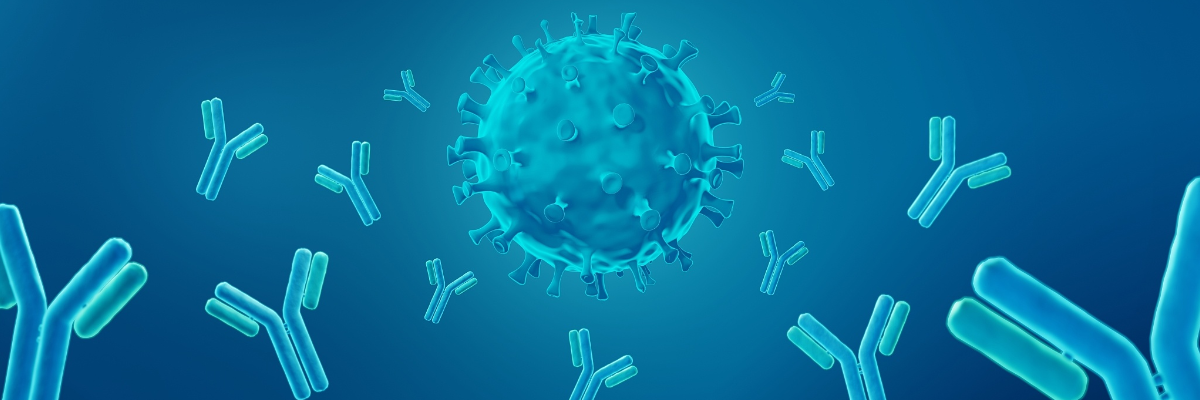
Antibody engineering has transformed the landscape of modern biotechnology, with VH/VL optimization standing at the center of efforts to improve binding affinity, target specificity, and overall molecular stability. The variable heavy (VH) and variable light (VL) domains determine how an antibody recognizes and engages its antigen. By modifying these regions through rational design, structural modeling, or directed evolution, researchers are able to enhance functional performance and expand applications across diagnostics, therapeutics, and advanced research. As recombinant antibody production becomes standard, VH/VL engineering offers a powerful route to obtaining molecules that outperform their natural counterparts.
Understanding the Structural Basis of Antibody Recognition
Antibody binding is driven primarily by the complementarity-determining regions (CDRs) within the VH and VL domains. These hypervariable loops determine the shape, charge, and hydrophobicity of the paratope, allowing the antibody to recognize specific epitopes on an antigen. The surrounding framework regions serve as the structural scaffold that stabilizes the CDRs. Even small alterations in CDR length, amino acid composition, or loop flexibility can significantly affect affinity. Similarly, adjustments to the framework can influence overall stability, expression levels, and manufacturability. Understanding the structural interplay between CDRs and frameworks is key to guiding successful engineering strategies.
CDR Optimization for Improved Affinity
CDR engineering is one of the most direct approaches for enhancing affinity. Modifying amino acids within CDR1, CDR2, or CDR3 can strengthen hydrogen bonding, hydrophobic interactions, or electrostatic complementarity with the antigen. For example, introducing aromatic residues can increase π-stacking interactions, while adding charged residues can improve contact with complementary surfaces. Structural modeling and computational analysis are often used to predict beneficial mutations. Experimental methods, such as targeted mutagenesis followed by high-throughput screening, further refine the design. By iterating through cycles of mutation and evaluation, antibodies with significantly improved affinity can be generated without altering their antigen specificity.
Framework Engineering for Stability and Developability
While CDRs drive antigen recognition, the framework regions ensure that the antibody maintains its correct fold and supports optimal CDR presentation. Engineering the frameworks can enhance thermostability, increase expression levels, reduce aggregation, and improve overall manufacturability. Substituting unstable residues or incorporating consensus framework elements can stabilize the protein. In some cases, grafting CDRs into optimized human frameworks is necessary for humanization or therapeutic development. Framework engineering also helps maintain compatibility between VH and VL domains, ensuring that the antibody assembles correctly and preserves its biological function.
Refining VH/VL Pairing for Improved Binding Behavior
The interaction between VH and VL domains significantly influences antibody performance. Even if each domain independently binds the antigen well, their pairing can create unexpected structural constraints or alter the geometry of the binding site. Engineering efforts often examine interface residues that contribute to domain–domain packing. Rational modifications can promote favorable hydrophobic interactions or strengthen hydrogen-bond networks at the interface. Improving VH/VL pairing frequently results in enhanced affinity, greater expression efficiency, and increased antibody stability. In some cases, altering the orientation of the domains can reveal novel binding configurations or broaden epitope recognition.
Applying Computational Tools to Predict High-Performance Designs
Advances in molecular modeling, AI-based structure prediction, and energy-scoring algorithms have significantly accelerated VH/VL engineering. Computational methods can analyze structural conformations, predict mutation impacts, and identify optimized CDR loop geometries. These tools help narrow down large mutation libraries and prioritize variants with high predicted stability or improved binding energy. Structural databases and machine-learning models trained on antibody–antigen complexes further assist in designing variants that maintain specificity while enhancing affinity. By integrating computation with experimental validation, researchers can reduce development time and increase design success.
Directed Evolution to Discover High-Affinity Variants
In addition to rational design, directed evolution offers a powerful way to improve antibody affinity by mimicking natural selection. Libraries of VH or VL variants are generated through random mutagenesis or targeted diversification approaches. These libraries are expressed in display systems such as phage, yeast, or mammalian display, where they undergo multiple rounds of antigen binding selection. Variants with the strongest interactions are enriched and further refined. Directed evolution can identify unexpected beneficial mutations that computational analysis might overlook, making it a valuable complement to structure-based engineering.
Balancing Affinity With Developability Requirements
Although high affinity is often a desired outcome, it is important to ensure that engineered antibodies retain favorable developability properties. Excessively high affinity may reduce dissociation rates, impair epitope accessibility, or interfere with biological mechanisms such as receptor turnover. VH/VL engineering therefore requires careful optimization to balance affinity, specificity, stability, and expression levels. Developability assessments—including aggregation propensity, charge distribution analysis, and thermostability evaluation—ensure that high-affinity antibodies also perform well in manufacturing and downstream applications.
VH/VL engineering enables the creation of antibodies with optimized affinity, enhanced specificity, and improved structural stability. Through CDR modification, framework optimization, interface engineering, computational modeling, and directed evolution, researchers can reshape antibody properties with remarkable precision. As recombinant antibody technologies advance, VH/VL engineering has become a central strategy in developing next-generation diagnostic antibodies, therapeutic candidates, and research tools capable of meeting increasingly demanding performance standards.
Led by an experienced team of recombinant antibody and protein scientists, GenCefe Biotech provides comprehensive solutions for recombinant antibody and protein production. Supported by our well-established gene synthesis platform and advanced CHO and HEK293 mammalian expression systems, we deliver end-to-end services—from gene synthesis and expression vector construction to antibody and protein purification, as well as large-scale manufacturing.